So cheap that they are effectively starting to replace 1080p monitors as the go-to entry-level choice for PC gamers.
As we approach 2025, we think 1440p is the new 1080p.
At the time, we were recommending theViewSonic VX2758-2KP-MHDfor $320 as a 1440p 144Hz IPS.
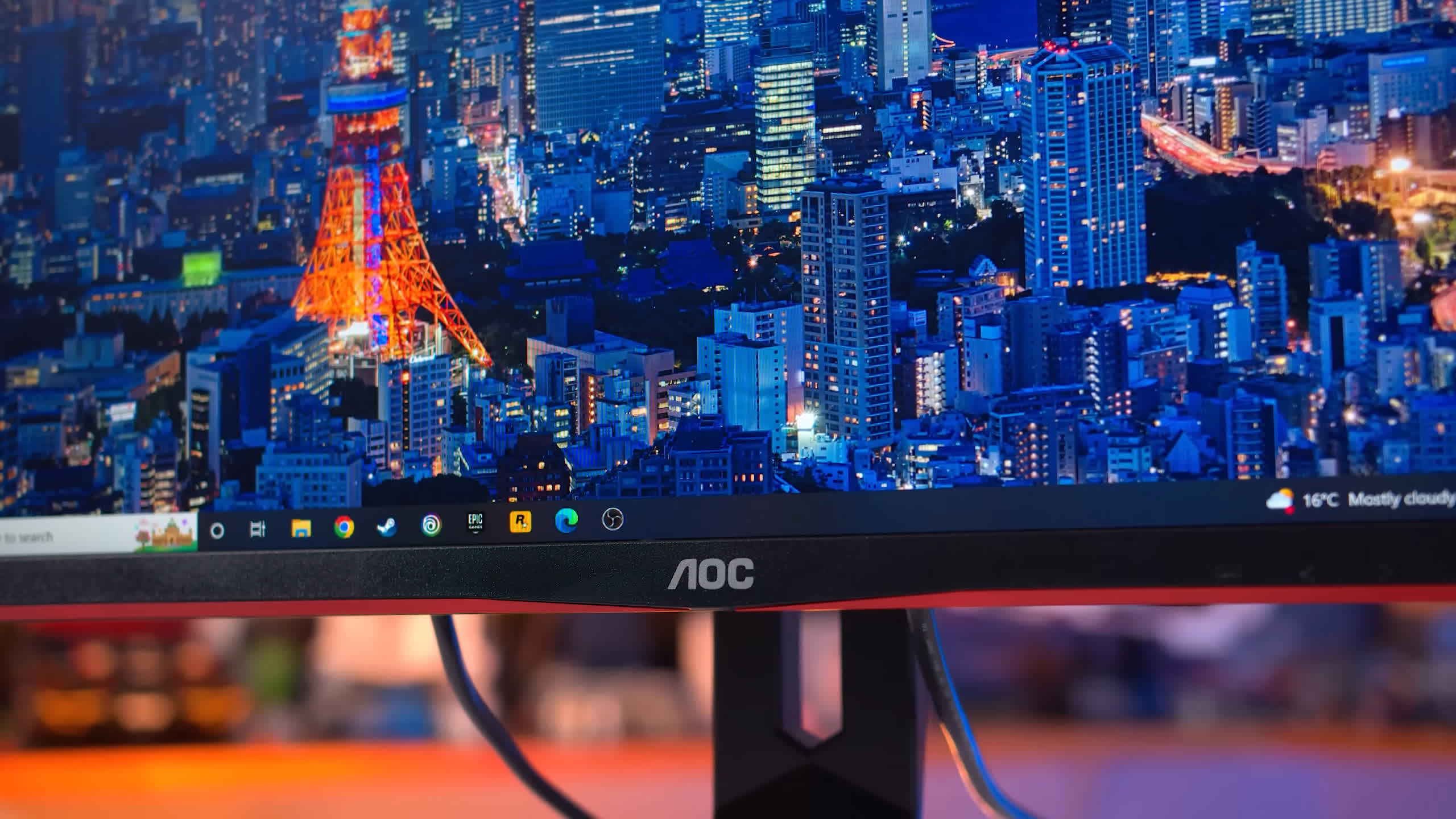
High-end 1440p options included models like theLG 27GL850at $500.
Fast forward to today, and despite inflation, these monitor categories have shifted down a tier in pricing.
Budget 1440p monitors that used to set you back $300 are now below $200.
The best cheap option is theDell G2724D, which is usually selling around$180 to $200.
We described this as a steal in our review.
The contrast ratio isn’t too bad either.
There’s also theAsrock PG27QFT2A, which is available around $160 - $190.
LG is offering one of their panels in theLG 27LG83Afor as little as$200.
TheGigabyte M27Qhas fallen in price by $50 since the start of the year.
And this is not even mentioning the many 1080p options available for more than $200.
To be fair, the cheapest 1080p gaming monitors today are priced closer to $110-130.
1440p Is Way Better
There are multiple reasons why 1440p is a substantial upgrade.
The most obvious one is pixel density, which directly relates to image quality.
That’s a 33% increase in density, which leads to a clearer, sharper image.
With a larger resolution comes more screen real estate.
It opens up more split-screen or side-by-side app configurations.
It allows you to do more and utilize smaller text sizes without things becoming unusably blurry.
This has big benefits in a lot of productivity use cases, or even things like web browsing.
Gaming Benefits From 1440p
For gaming, there are plenty of benefits for going 1440p as well.
But an equally significant factor in many modern games is the image quality you get at lower resolutions.
This is because all upscalers work better at higher resolutions.
The overall image quality from, say, DLSS Quality mode is much better at 1440p compared to 1080p.
At 1440p, the output is closer to the native, non-upscaled image than it is at 1080p.
The simple reality is that these upscalers haven’t been designed with 1080p in mind.
And again, this upscaling quality difference is in addition to the pixel density benefits of a higher resolution.
All games, even those without upscaling, look better at 1440p.
And that’s at native 1440p; if you factor in upscaling, that average improves substantially.
There are all sorts of layers to this as well.
It’s no longer a premium or mid-range feature that’s inaccessible to budget buyers.
1440p monitors these days are cheap, high-quality, and are what we’d recommend below $200.
Graphics cards and even games themselves are moving toward 1440p as the baseline for image quality and performance.
Video content is now widely available at resolutions above 1080p.
And there’s no doubt that desktop apps are better suited to higher resolutions.
