After all, the last game in the main series was released in 2010.
The game was released by Broderbund in 1989.
At first, the game was a failure.
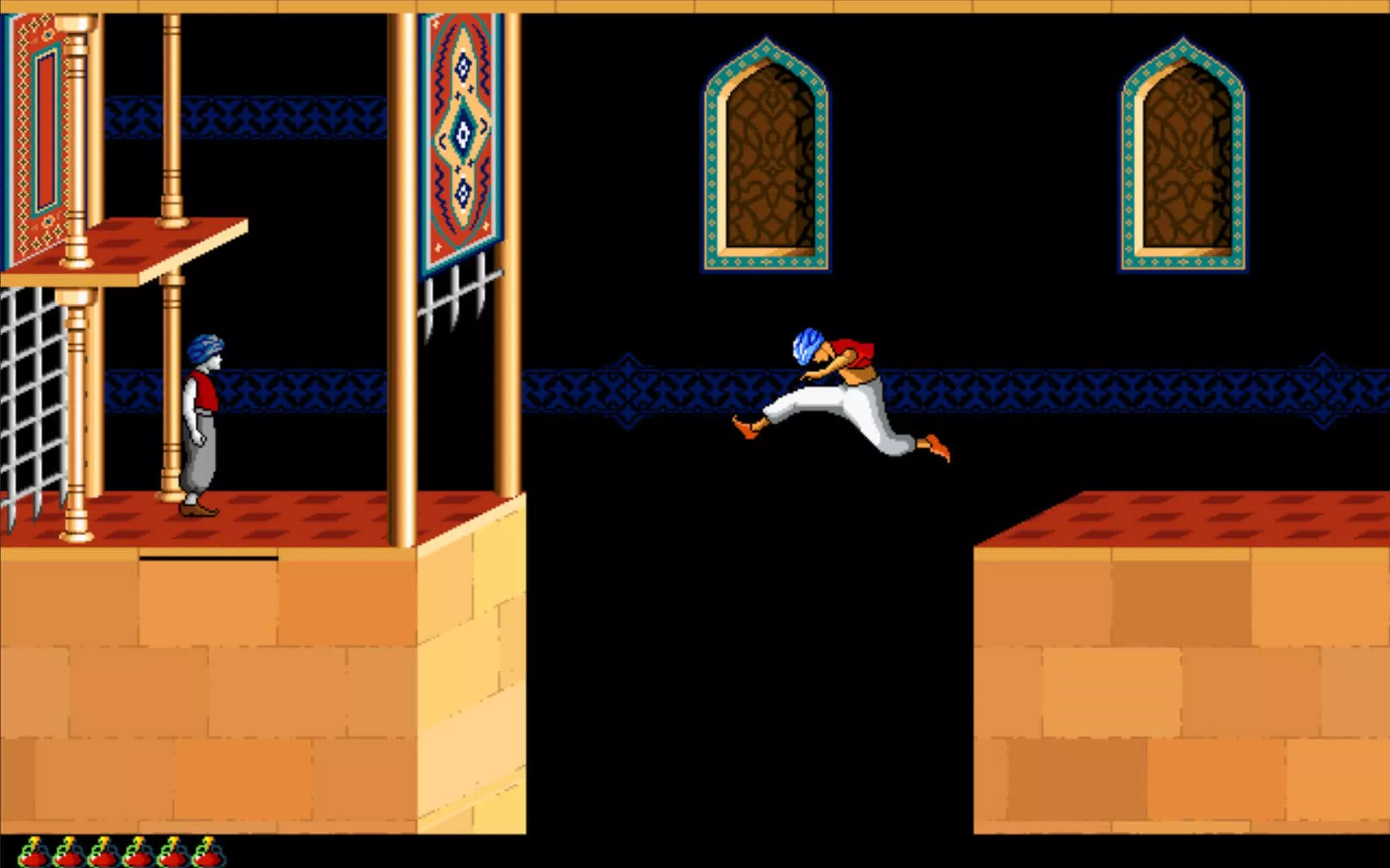
By then the Apple II was an aging platform, with only four colors during gameplay and ear-piercing music.
These versions offered much improved graphics and sound.
The SNES version was arguably the definitive edition, with 20 levels and a two-hour time limit.
Combined, all versions sold over 2 million units.
This installment featured vocal narration and more varied (and, towards the end, surreal) environments.
For this sequel, Mechner only contributed the initial design instead of creating the entire game himself.
The game was ported to Macintosh the following year.
However, it wasn’t until 1996 that the SNES version was released.
Unlike the original game, the SNES adaptation was shorter and omitted several levels, including the final one.
A Genesis port was developed but never released.
The final part in the trilogy was canceled.
It also omitted the two levels that received the most criticism in the PC version.
However, this version allowed game saving only at infrequent checkpoints, which led to player frustration.
In 2002, the series entered the mobile gaming market with Prince of Persia: Harem Adventures.
The game received universally positive reviews and sold 2 million copies by the end of the year.
First, it used a modern control system, with movement relative to the player’s perspective.
Combat was simple yet challenging and visually engaging.
Despite generally positive reception, the Game Boy Advance (GBA) version paled in comparison to the others.
Console limitations aside, it simply didn’t play like a Prince of Persia game.
If anything, it resembled the Aladdin game that found success on the Genesis a decade earlier.
Simultaneously, a new team at Ubisoft Montreal was working on a direct sequel to The Sands of Time.
The Prince’s voice actor, Yuri Lowenthal, was replaced by Robin Atkin Downes.
Nevertheless, the game sold 1.9 million units within a month.
The gameplay choices were intended to affect the game’s ending.
Lowenthal returned to voice the Prince.
The Dark Prince remained a character, but players no longer had the choice of when to transform.
The game introduced stealth kills and chariot races.
Despite its issues, The Two Thrones received as many positive reviews as Warrior Within but fewer negative ones.
In 2007, it was ported to the PSP and Nintendo Wii as Prince of Persia: Rival Swords.
This turn-based military strategy game incorporated trading-card game elements.
The series became a leader in another market withPrince of Persia Classicfor the Xbox 360 in 2007.
The Prince could wall-jump, back-flip and roll to avoid traps.
The tiles that the Prince needed to step on were clearly marked.
The combat system was rebuilt, with separate buttons for striking and blocking.
The game was released the following year and had sold 8 million copies by 2009.
In recent years, the series has remained highly profitable, with fewer games and more downloadable expansions.
This new game, released in 2008, was simply titledPrince of Persia.
Unlike the realism-focused Assassin’s Creed, this game was designed to resemble a watercolor painting.
Combat always involved a single enemy, allowing for close-up camera angles.
Reviews were mostly positive, but somewhat mixed.
The story was similar to that of its narrative predecessor, except for the ending.
Elika was replaced with a magician named Zal.
The game received mixed reviews and was primarily criticized for its control scheme on a console with physical buttons.
Apart from the mobile phone version, this new incarnation of the Prince never appeared in another game.
In the motion picture, the Prince was the adopted son of a king and named Dastan.
Not surprisingly, Disney never ordered a sequel.
What’s in a Name?
These games differed not only in graphics and controls but also in plot and setting.
The story was predictable and not intended for deep contemplation.
The most controversial part of the game was combat.
As the game progressed, battles gained a tactical element with different enemy types.
Additionally, the healing system was the least logical in the entire series.
The game also featured several puzzles involving overlapping rails.
Graphics were less detailed, but it could run at 60 fps.
The PSP game was a misunderstood gem.
Its side-scrolling perspective effectively accommodated the console’s limited button layout.
However, if one accepted this as part of the gameplay, the challenge could be enjoyable.
Collecting sand allowed for an upgraded arsenal of attack moves, adding some variety.
The Nintendo DS game bore a strong resemblance to The Fallen King.
With no second character on the screen, controlling the Prince with a stylus became inexcusable.
The game added animated intro and outro, but except for them barely had a story at all.
The following year, Ubisoft announced a remake for The Sands of Time.
Reviews for the game are the most positive the series has seen since The Sands of Time.
Instead, players control Sargon, a member of a magical warrior clan called the Immortals.
While air dashing could be explained as magical, even standard jumps feel like rocketing into the air.
