Curious, of course, I investigated further to find that ADATA was behind the bold claim.
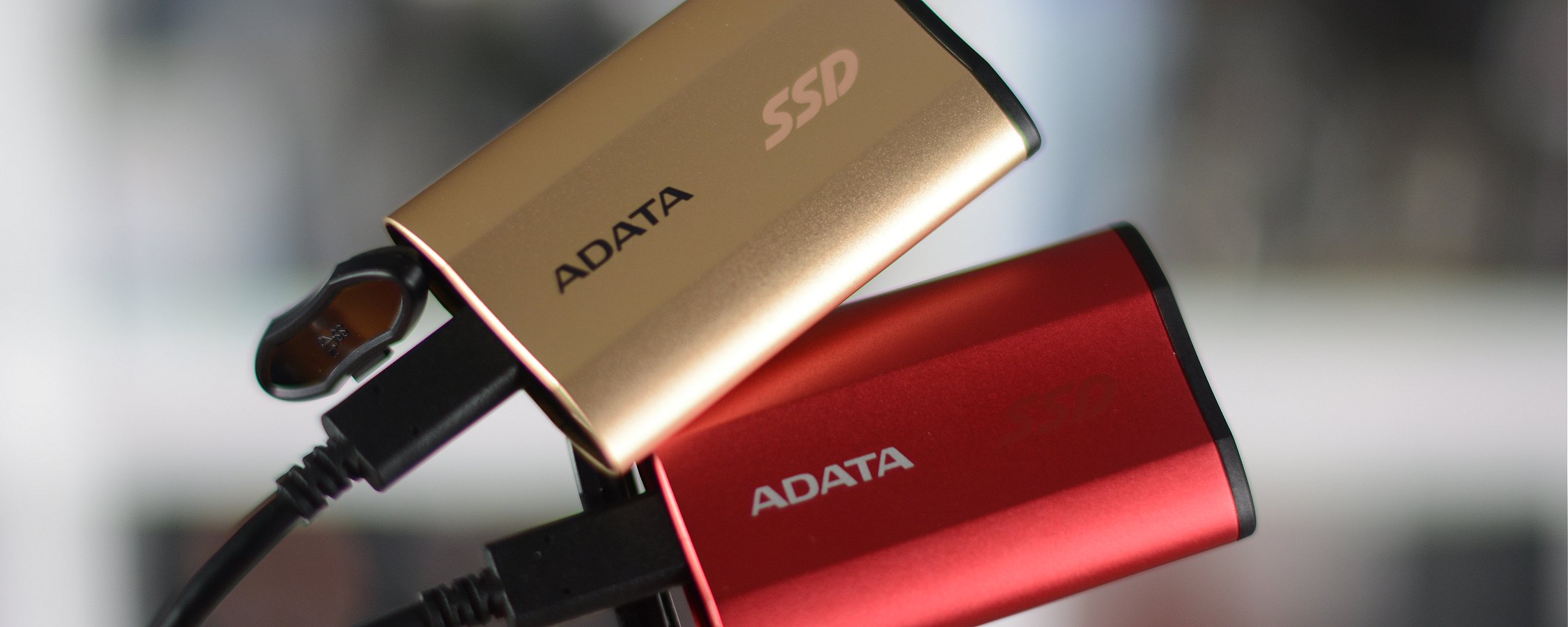
I couldn’t pass on taking a look at this tiny yet apparently mighty portable SSD.
The drive only requires 4.5 watts to operate so it can be powered from the USB interface.
That’s a little disappointing for a product that is meant to put the T3 out to pasture.
Variety certainly isn’t the SE730’s strong point, but how about value?
The SE730 struggled massively in the program download test.
Here it managed a transfer speed of 117MB/s making it almost 50% slower than the Samsung T3.
That said, with a throughput of 149MB/s, the SE730 was still 11% slower than the T3.
ADATA’s little portable SSD was down 42% on the T3 as the throughput maxed out at 74.3MB/s.
Final Thoughts
We’re not sure what to make of ADATA’s new portable SSD.
The company came out swinging with claims of its drive being faster and better than Samsung’s T3 series.
That’s a tall order and they ultimately fell short on delivery.
We wonder how ADATA plans to compete in a space so populated with portable SSDs of varying capacities.
For a bit more money, you could also buy the 500GB T3 ($170).
The T3 is also slightly faster, at least the 1TB model that we have is.
ADATA’s compact packaging certainly has appeal and so does being waterproof, dustproof and shockproof.
Aesthetically, the gold version didn’t do much for me but I did like the red model.
Pros:Compact enclosure that’s water/dust/shockproof.
Strong single large file download speeds.
