Infotech
At the heart of every computer lies a tiny yet mighty central processing unit, or CPU.
After extensive research and experience, we have compiled a detailed guide about AMD vs. Intel processors.
The two companies have dominated the industry for decades, each bringing unique strengths and approaches to processing technology.
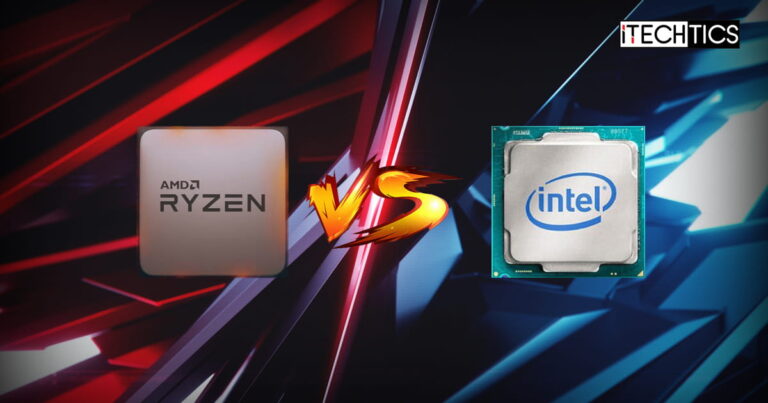
But what sets them apart from the competition and makes them the leaders in their field?
However, there are various aspects to consider when comparing both the top-end processors in detail.
Below is our take on the factors that play a significant part in the overall performance.

Lets check it out.
For video editing, encoding both audio and video simultaneously can be quite demanding.
Because of this, AMD is well-known for rolling out the most energy-efficient CPUs.

The latest generation of chips prevents the CPU from overheating even under extensive load.
Intel, on the other hand, is known for its single-core performance.
Hyper-Threadingallows each core to handle two threads simultaneously, doubling the number of threads the processor can handle simultaneously.

That said, Intel processors are now designed to deliver high performance for both single-threaded and multi-threaded tasks.
Gaming
AMD and Intel processors both have their own strengths and weaknesses when it comes to gaming.
Another factor to consider when choosing a processor for gaming is the integrated graphics card.
Intels integrated graphics options are more suitable for less demanding games or games played at lower resolutions.
AMD processors are like marathon runners, excelling at multi-tasking and handling many tasks simultaneously.
Whereas Intel processors are like sprinters, delivering lightning-fast performance for individual tasks.

One major difference between the two companies is the architecture of their processors.
AMD processors are built using the Zen architecture, which is optimized for multi-threading and high core counts.
However, Intel processors are built using the Core architecture, designed for high clock speeds and single-threaded performance.
Another key difference between AMD and Intel processors is the manufacturing process.
AMD processors are typically manufactured using a 7nm process, which allows for smaller transistors and higher performance.
Finally, the pricing of AMD and Intel processors also affects their performance.
AMD processors tend to be more affordable, which makes them an attractive option for budget-conscious consumers.
In conclusion, both AMD and Intel processors offer different advantages in terms of performance.
The best choice between the two will depend on the specific needs and budget of the user.
Additionally, AMDprocessors have a more efficient powermanagement system, which can reduce heat generation.
Another factor that can impact the price difference between AMD and Intel processors is competition in the market.
They both have 6 cores and 12 threads, meaning they can handle multi-tasking and demanding applications efficiently.
They also support high-speed memory, allowing fast data access and improving overall system performance.
However, some key differences in their technical specifications.
Both were released in the first quarter of 2017.
Considering the cores and threads, these processors can efficiently multi-tasking and handle multiple processes simultaneously.
Additionally, both processors support high-speed memory, providing fast data access and improved overall system performance.
Intel, however, has 8MB of L3 cache.
In conclusion, the i7-7700K and Ryzen 7 1800X offer excellent performance but different strengths.
Intel is better suited for gaming and single-threaded tasks, while AMD is suitable for multi-threaded workloads.
On the other side, AMD Ryzen 7 1800X is slightly less expensive than Intel at $295.
Both processors also support high-speed memory.
The Intel is likely to consume 95W TDP and hence is suitable for high-performance builds.
However, AMD takes up around 105W TDP therefore; it heats up a bit quicker than Intel.
Will it be for gaming, content creation, or general-purpose computing?
Different processors may be better suited to different tasks, so its important to consider your specific needs.
More cores can lead to better performance, which usually means a higher price tag.
Here is a list of core counts based on the purpose.
Additionally, the specific software and workloads you plan to run will also affect the ideal number of cores.
Higher clock speeds can lead to better performance but also generate more heat.
Here is a comparison chart for AMD VS. Intel CPU overclocking performance:Intel VS AMD Overclocking comparison.
More cache can lead to improved performance, especially in demanding applications.
It is suggested to consider the iGPU of Intel and AMD processors while purchasing.
Intel processors with integrated graphics are called Intel UHD Graphics.
For example, Intels 11th Gen processors offer improved graphics performance compared to previous generations.
AMD processors with integrated graphics are commonly known as AMD RadeonGraphics.
AMD or Intel Processors Which One Is The Winner?
Their processors are known for their fast clock speeds and strong single-core performance.
Therefore, they are preferred by content creators and power users who demand easy load management.
0
Get weekly insights, tips and exclusive content delivered straight to your inbox.
Talk to us straight and get your questions answered right away
source: www.itechtics.com
