Google is clearly fed up with developers who ignore adaptability when designing their apps.
The mobile OS powers smartphones, foldables, tablets, Chromebooks, car infotainment systems, and more.
With this diversity, users expect the apps they download to function seamlessly across all their devices.
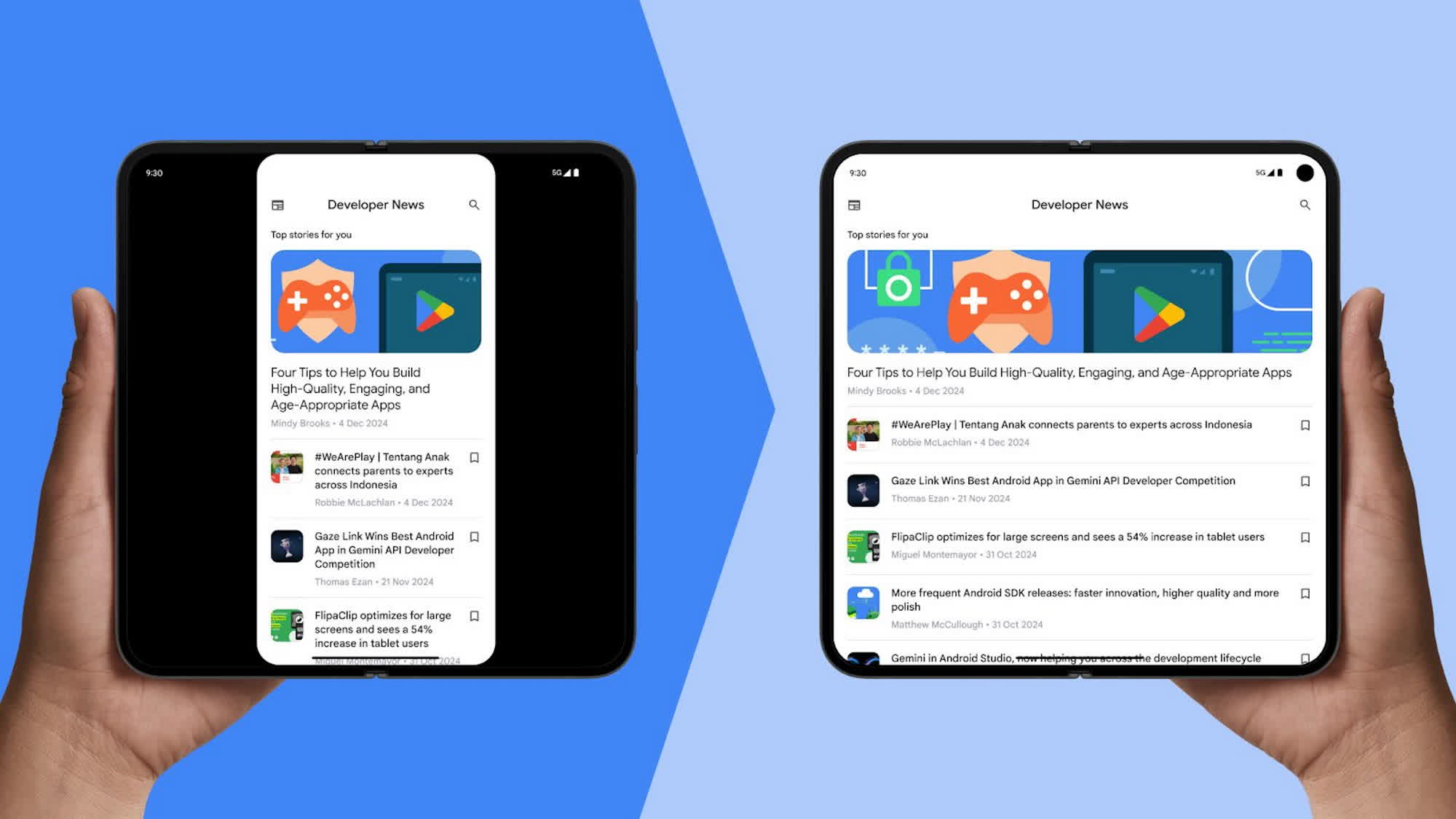
However, some developers still force their apps to follow rigid, fixed UI paradigms.
Many Android apps are still designed for a single screen orientation or restrict users from resizing the interface.
With Android 16, that’s set to change.
This includes foldable phones, tablets with desktop windowing capabilities, desktop environments, and Chromebooks.
However, there are exceptions apps can still enforce UI restrictions on smaller screens or in specific gaming scenarios.
Building fully adaptive apps benefits both developers and users.
Google also shared a timeline for these API changes.
In 2025, Android 16 will include an option to opt out of the new adaptive paradigm.
