When you compare your available options, you’ll soon realize that outward design is the only differentiator.
Choose your design, choose your switch—that’s it.
But what if I told you that every part of a keyboard can be customized.
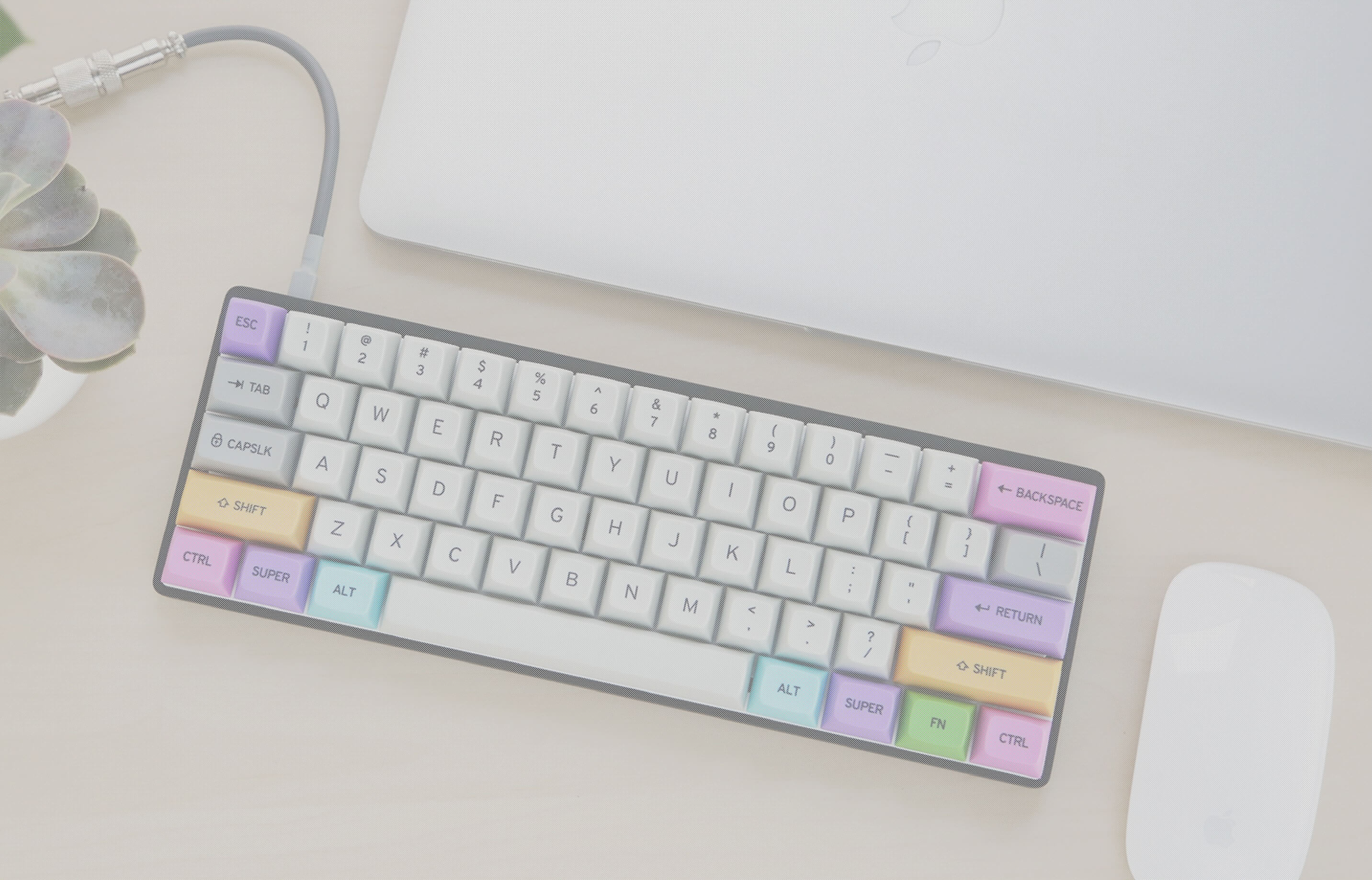
This goes far beyond the aesthetics of buying the latest keyset from Massdrop or swapping in a braided cable.
With pre-built boards you don’t get to choose the size or the layout.
If you’re not one for making compromises, it may be time to build your own.
Your first instinct might be to hop onto Amazon and start searching for parts.
This typically comes down to budget and doesn’t impact the functionality of the keyboard.
Cases are usually available in one of 4 different materials.
Aluminum is the most expensive option but offers the strongest platform for your keyboard.
The added weight can help keep your keyboard in place during those heavy work or play sessions.
It also provides a premium look and feel that you won’t find in plastic cases.
Other than cost, the main downside is the effect on acoustics.
Some people prefer this, but it’s something to bear in mind.
Plastic cases offer the best bang for the buck.
The added strength that aluminum provides might feel more premium but is seldom a requirement.
Plastic cases are still plenty strong and less likely to show scratches.
They are also dirt cheap and significantly reduce the overall cost of your keyboard.
You are more limited in color choice with the majority of cases coming in black and sometimes white.
You don’t get many of the vibrant finishes that anodized aluminum cases offer.
The last option that’s become quite popular is the clear acrylic case.
The PCB is the heart of your keyboard.
It allows your inputs to be sent to your setup and controls which switches perform which functions.
Many PCBs allow you to change the layout of your switches in a way that allows for this.
This is another example of how one component can help in the selection of another.
There are a few PCBs that support hot swappable switches.
There are a few downsides when going this route.
Your PCB options become quite limited as most boards on the market are designed with soldering in mind.
It is also possible for the sockets to become damaged or pull out of the PCB when removing switches.
This isn’t very likely but it’s something to keep in mind.
Soldering is also a very valuable skill; building a keyboard is the perfect project to learn with.
These four attributes make for a wide range of different feeling switches.
Some are more tuned for specific tasks such as typing or gaming but ultimately the choice is entirely subjective.
Many companies sell switch testers that you might buy.
These are usually a small box with a variety of different switches mounted.
I personally recommend brown switches, either Gateron or Cherry.
If you want to dive deeper into the differences between switches be sure to check out thisguide.
Stabilizers are an often overlooked component when building a keyboard.
They aren’t very exciting or customizable but you’ll know right away when they are missing.
They are typically sold as a standard set to work with most keyboard layouts.
If you’ve gone with a non-standard layout, you’re options are greatly diminished.
If you excel at touch typing, there is another much more cost effective method—blanks.
As with any project, there are a few tools required to get the job done right.
With that said, the old adage, “You get what you pay for” holds true here.
It’s generally preferable not to burn holes in household objects when you need a spare hand.
This is a very basic tool and any model will do.
Your choice of solder can make this project relatively easy or extremely frustrating.
It’s also important to grab the right size for the job.
For soldering switches, 63/37 rosin core solder comes highly recommended.
confirm to choose the correct size, usually anywhere between .03 and .06 will work here.
Solder smoke is hazardous, especially if you’re using leaded solder.
Be sure to pick up a solder fume extractor.
They can be had for under $100 and will keep you safe.
If you’re not one for making compromises, it may be time to build your own.
