Both pack upgraded camera systems in an attempt to retake the crown.
This is essentially the same setup as the Galaxy Note 8’s secondary camera.
There’s OIS for both cameras, too.
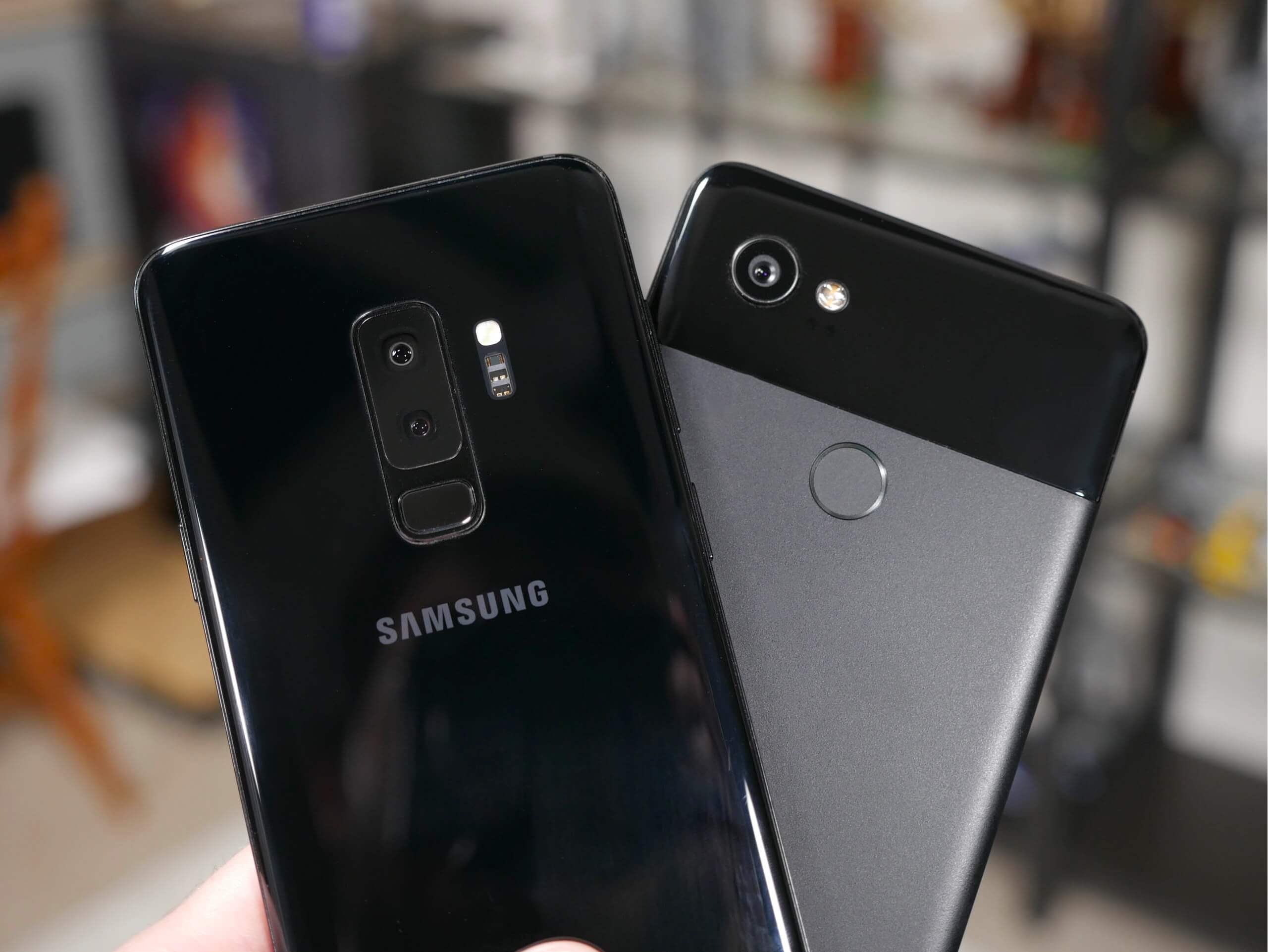
Basically the same as the Galaxy S8 in this department.
Can Samsung’s Galaxy S9+ do it?
Similar to the Galaxy S9+ from a hardware perspective, minus the dual-aperture lens and additional sensor.
On the front is an 8-megapixel selfie camera with an f/2.4 25mm lens and 1.4m pixels.
First up we have a generic wide angle photo in the beautiful Australian sun.
Looking closer, it’s flush the Pixel 2 has significantly better image detail.
There’s also much more detail in the leaves on the trees, and the grass in the foreground.
Exposure is once again an issue with this photo taken outdoors in bright sunlight.
Similarly, the Pixel 2 image has much better depth and detail to the concrete area.
It is a slightly darker image, but it’s not overwhelmed with crushed shadows.
Moving indoors, here we have a shot of some Lindt balls.
Background blur is similar in both images, with a slight edge to the Galaxy S9.
This image is a great example of the perils of oversaturation and incorrect exposure.
The increased saturation of the Galaxy S9+ photo means you lose this detail and nuance as a result.
One of the key advantages to getting the Galaxy S9+ is its secondary 2x zoom camera.
Here, the Pixel camera solution suffers from not having this additional camera.
The Galaxy image has a pink tone and overexposure causes high-end detail to be lost in the bright reflections.
This photo is a clear win for the Pixel 2 XL.
The Galaxy S9+ photo is slightly whiter and brighter, but depth and detail is lost as a result.
The Pixel 2 XL image has more depth across the board.
In this test, I dropped the cricket ball from my hands and simultaneously pressed the capture button.
The ideal shot would have been the ball mere milimeters from my fingertips after releasing my grip.
For most people wanting an instant capture, this will be fine.
