What We Know (and What We Don’t)
How the mighty have fallen.
Intel, a name synonymous with computing.
Intel Inside, a phrase synonymous with quality assurance.
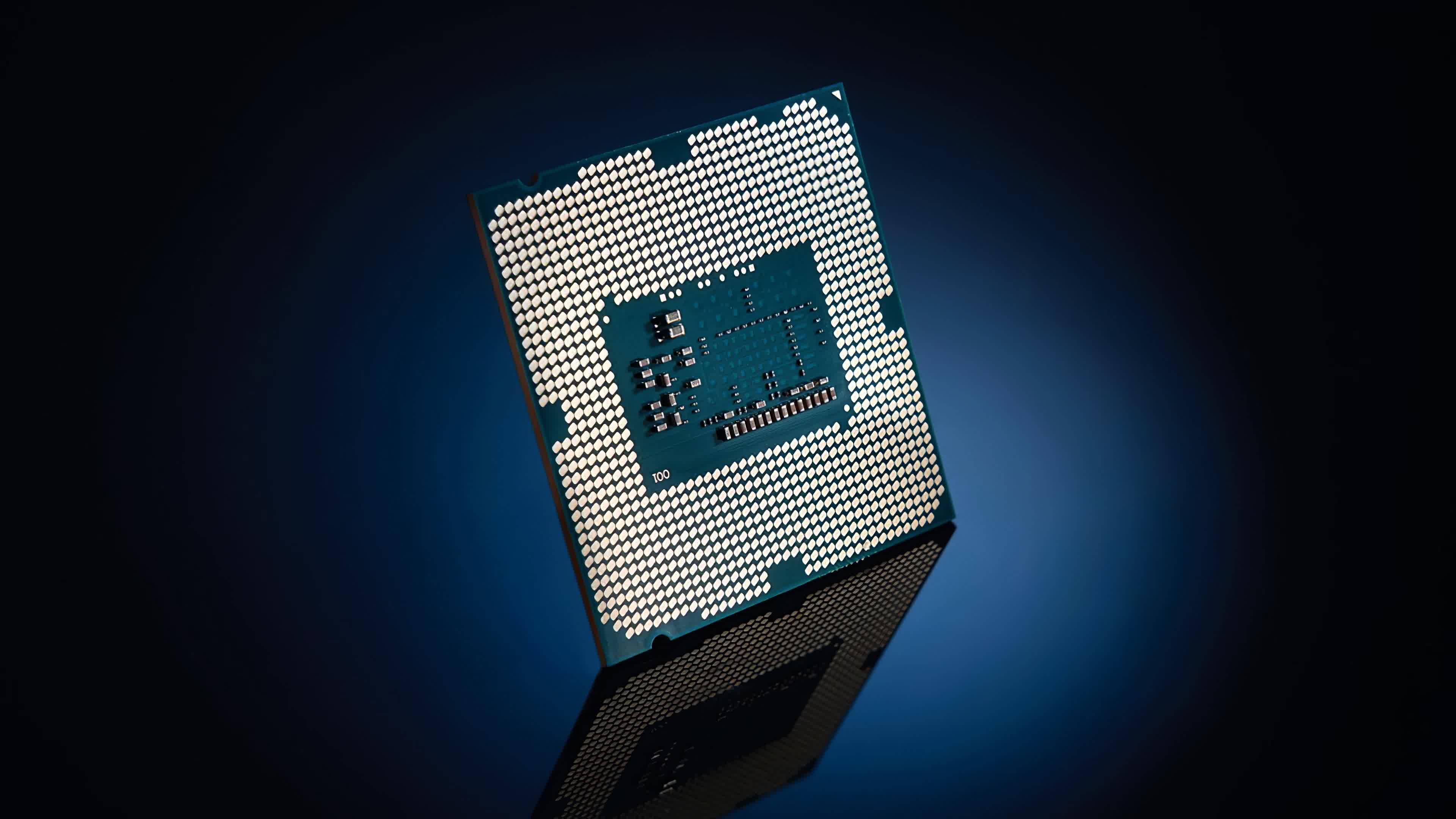
We’ll soon see.
But such a challenge cannot go unanswered.
Intel’s upcoming new architecture will arrive with a smattering of new technologies.
But will Rocket Lake carry Intel to new heights, or will it crash and burn?
Let’s take a look at what we know so far.
What’s the Flight Plan?
Rocket Lake will also be the last generation of Intel desktop processors to use the 14nm node.
Blast Off!
Bonini confirmed support for PCIe 4.0, anddatabase entrieshave seemingly confirmed integrated Xe graphics.
Neither new feature can be implemented without a new architecture.
And to round it off, the new cache configuration has beenexposed.
Rocket Lake’s cache configuration isn’t unique though.
Because of these similarities, it’s likely that Rocket Lake is based on a derivative of Sunny Cove.
The name of the derivative isrumoredto be Cyprus Cove.
There are a few differences, though, which is why the architecture merits a new name.
But despite the change, the two architectures are expected to perform similarly.
And now for the fun stuff.
Intel claims that Sunny Cove has an 18% IPC advantage over Skylake.
While Xe is a significant improvement over previous generations, it’s still nothing compared to discrete solutions.
The most interesting thing about the Xe graphics is the 10nm node they’re built on.
Why is Intel adding 10nm graphics to a 14nm processor, and how?
This enables them to be counted.
Seven distinct Rocket Lake graphics devicesappearedin an Intel developer driver when it was published accidentally in July last year.
They’re on the left in the table below (starting with iRKL).
GPUs ending in 32 will have 32 EUs, and those ending in 16 will have 16 EUs.
It’s widely suspected that there won’t be a processor with ten cores this generation.
- It’s probably a consequence of the new architecture.
*Press F for respect.
The octa-core model has been observed five times.
Each time, it had sixteen threads and an integrated GPU of 32 EUs operating at 1.15 GHz.
Lastly, anotherGeekbench 5 resultshowed a 3.4 GHz base clock and a 5.0 GHz boost clock.
(The fifth result wasan anomalous1.8 GHz.)
The hexa-core processor has been spotted twice, and always with twelve threads.
SiSoftware recorded two GPU configurations: a 23 EU model, and a 32 EU model.
Both were clocked at 1.15 GHz.
Summary
Effectively, there’s been three different processors spotted.
Two octa-core models clocked at 3.2/4.3 GHz and 3.4/5.0 GHz, and a hexa-core model clocked at 3.5/4.2 GHz.
How Fast Are We Flying?
In almost every leaked benchmark, the Rocket Lake processors have performed terribly.
and consider thesinglegood result.
At 1507 points, it surpasses the average i7-10700K score by 11%.
It can be deduced that there issomeIPC performance improvement yielded by the new architecture, if not a lot.
But by what margin?
Touching Down
Rocket Lake will bring sweeping changes to Intel’s platform.
Chief among them is the upgrade to PCIe 4.0.
The slide offers some exciting news, though.
There’ll be “new overclocking features and capabilities,” too.
There’s also a new selection of modern ports, including Thunderbolt 4 and more USB 3.2.
Using the new features will require a new 500-series motherboard.
Aleaked roadmapsuggests the existence of the Z590, H570, B560, and H510 series.
They’ll reportedly release in March.
However, a new motherboard won’t be an essential purchase.
Rocket Lake will use the LGA 1200 socket and might slot into the Z490 motherboards.
Its successor, Alder Lake is expected to launch six to nine months later.
How do we know all that?
Intel announced Alder Lakebeforethey announced Rocket Lake.
Even Intel know that Rocket Lake pales in comparison to Alder Lake.
Is Rocket Lake fated to explode on the launchpad?
