Now you might be asking, why didn’t LG want you to review this monitor?
When we refused, they asked us not to publish the review.
Instead we exposed them, as all reviewers should maintain full editorial control over their independent reviews.
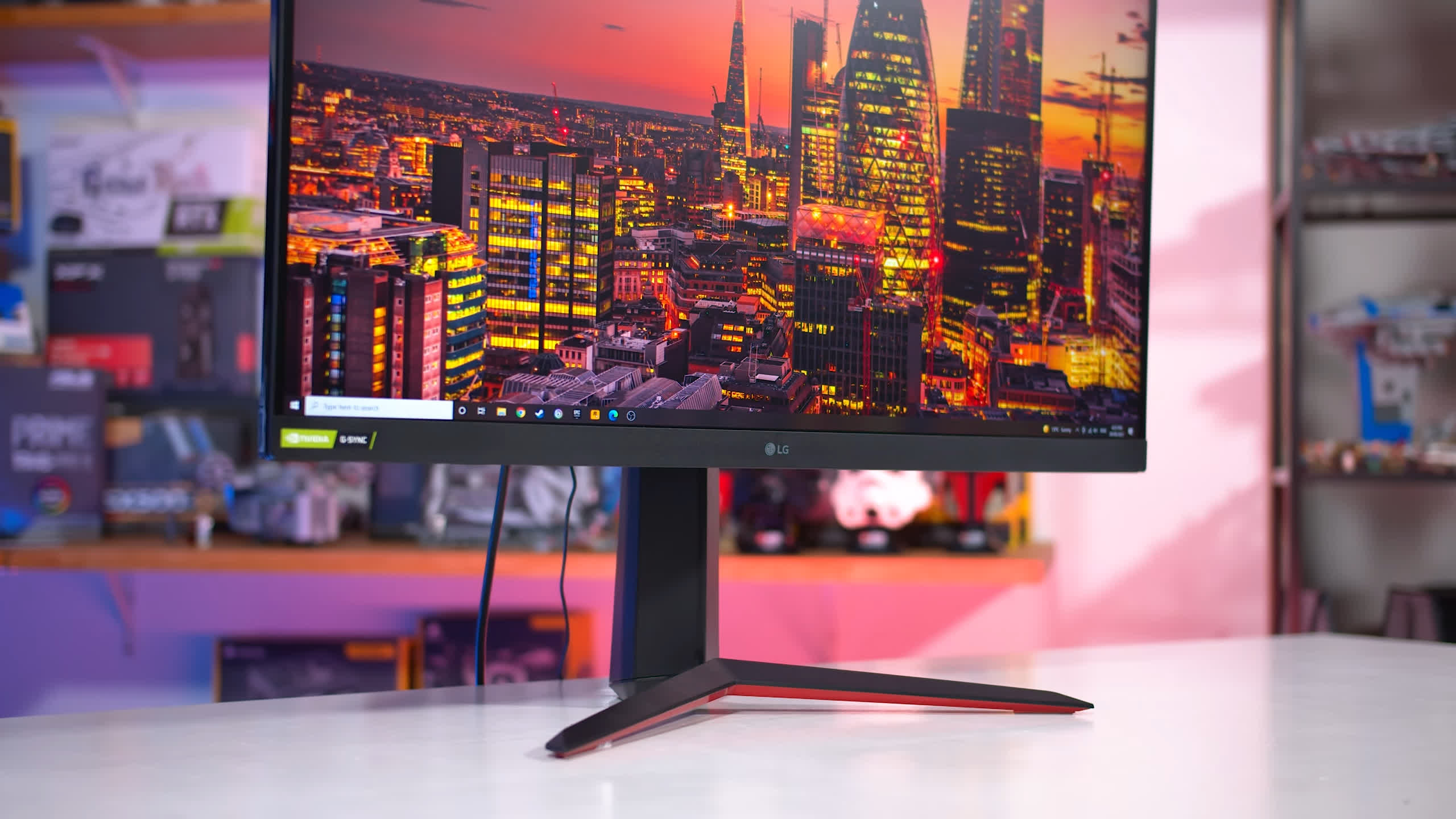
This is a 32-inch 1440p IPS monitor with a maximum refresh rate of 180Hz.
From a design perspective, the 32GP850 looks virtually identical to the 27GP850 except for its larger size.
There are some subtle differences to the design.
Everything else is also just bigger.
I’m a fan of this rear design because of how easy it makes accessing the rear ports.
Not as ideal for wall mounting but this prevents fumbling around during the setup process.
Two HDMI 2.0 ports and one DisplayPort 1.4, plus a couple of USB ports and an audio jack.
There’s also VESA mounting support if necessary.
Then we move up to the Normal mode at 180Hz.
This typically indicates good motion clarity.
The step up from Normal is Fast.
For variable refresh rate gaming we do have to assess performance across the refresh range.
To summarize the results aren’t perfect by any means, but not awful.
Variable overdrive would have been a good addition here to resolve these lingering concerns.
However the winner here in my opinion is theAsus PG329Qwhich features variable overdrive.
We also see the 32GP850 and M32Q delivering basically the same numbers here.
Dark level performance is a non issue, as the 32GP850 uses IPS technology.
Unfortunately, most VA displays with the exception ofSamsung’s Odyssey G7deliver dark level smearing.
Not a massive difference, but LG’s Nano IPS panel appears quite efficient.
The image clarity you get with the Asus monitor is also the best of these three options.
Color Performance
Next up are the color performance results.
As a result, when we look at total Rec.
Factory greyscale calibration was a bit wonky on my unit.
LG are also shipping this monitor without an sRGB gamut clamp or emulation mode enabled by default.
So a pretty typical result for a gaming display but far from ideal.
However, LG does ship the 32GP850 with an sRGB mode, and it does work to some degree.
After a full calibration, performance improved again over what was achievable in the OSD.
Of course, LG does list “HDR10” support but this number is not sufficient for true HDR.
One area that continues to be a problem for LG’s Nano IPS panels is the contrast ratio.
Who Is It For?
Overall, theLG 32GP850is a pretty good monitor.
Just get whichever size you prefer.
The main strength to LG’s IPS gaming monitor line-up is the great balance between performance and image quality.
But I just can’t find any major deal breakers here.
Even looking back at the exact guidelines LG provided, they don’t make much sense.
It’s still quite competitive.
The UFO Test guidelines make a minimal difference and still exhibit the red fringing issue.
