It’s ready to take a shot almost instantly, with low shutter lag.
Samsung puts atonof time into image processing, whereas it seems like Motorola has opted to use near-stock processing.
Images taken with the Galaxy S7 are much more vibrant, with better metering and superior automatic HDR.
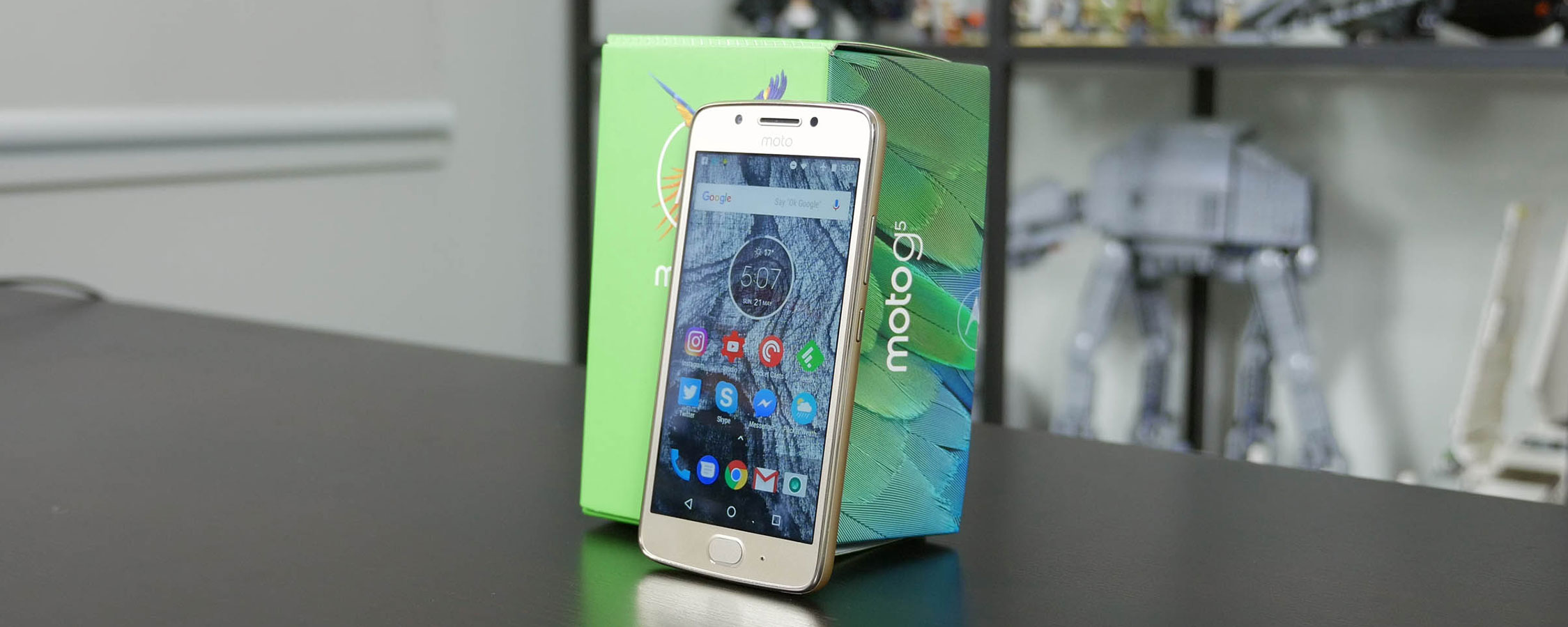
There are some positive aspects to the G5 Plus camera.
Low light performance is clearly better than the G4 Plus due to larger pixels and a wider lens.
The Moto G5 camera is a step down from the G5 Plus.
It uses a 13-megapixel sensor with an f/2.0 lens, and it supports auto-HDR with 1080p video capture.
Despite the slight resolution upgrade, the camera’s quality and performance isn’t as good.
For example, there’s no dual pixel support, so autofocus speeds are noticeably slower.
Low light performance is poor, as you might have expected, producing dark and grainy imagery.
This is another disappointing regression in camera performance for Motorola.
Its performance isn’t surprising from a phone that is priced around the $200 mark.
Motorola still hasn’t bothered to improve their camera app, which remains weak and underfeatured.
It’s a basic app for budget phones.
The one bonus here is the inclusion of 4K capture in the Moto G5 Plus for the first time.
