They are expensive, and lithium is an environmentally unfriendly material in limited supply.
This milky-white, paper-thin material serves as an excellent solid-state electrolyte layer inside a battery cell.
However, liquid electrolytes have downsides, such as potential leakage.
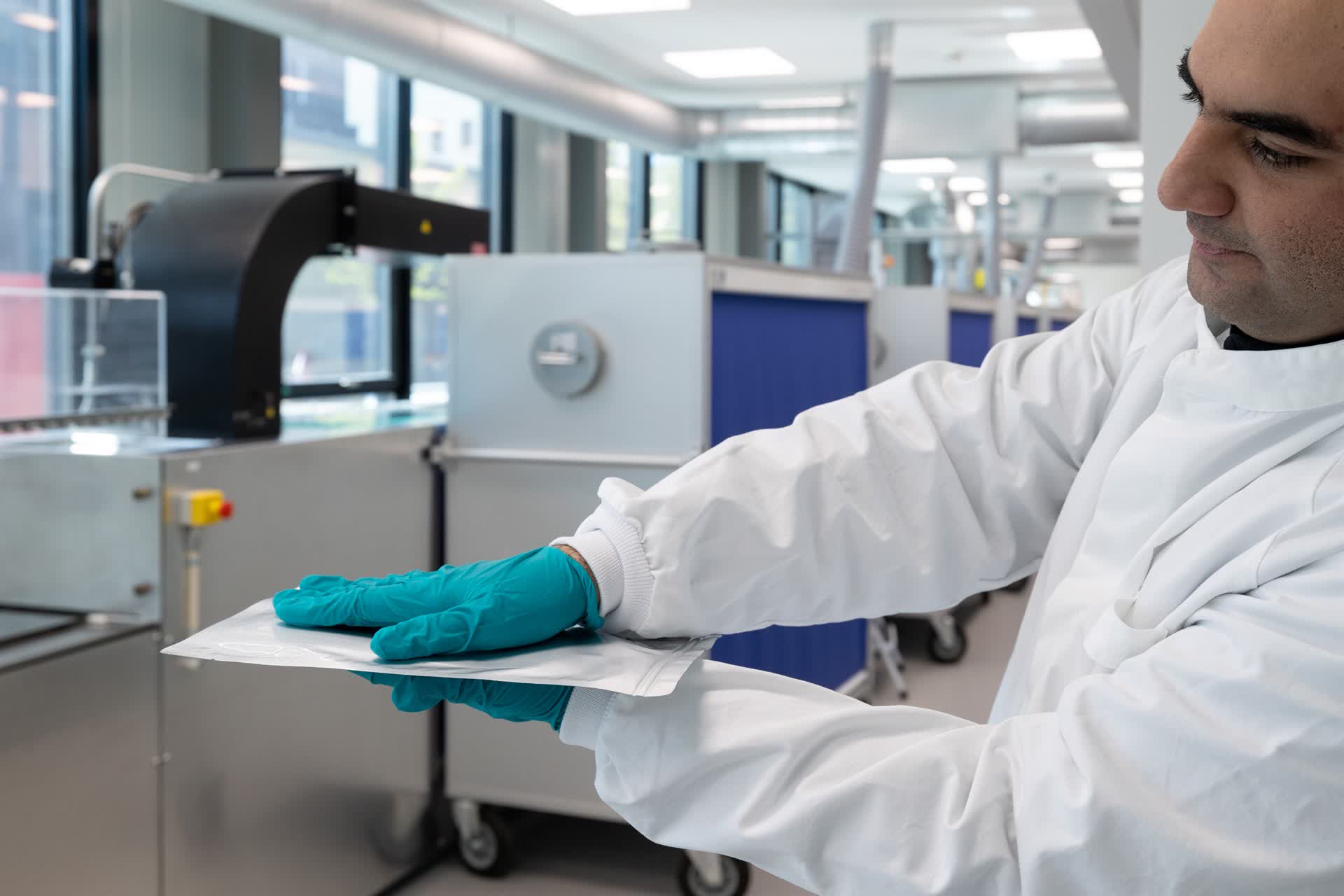
Solid-state electrolytes are safer and can enhance performance.
Khoshkalam’s electrolyte also conducts ions at around 40C, which is close to room temperature.
Additionally, the material doesn’t react negatively to moisture.
Transforming the electrolyte into a usable battery form is a multi-step process.
His initial tests show strong performance for a solid-state electrolyte.
The technology is still new compared to lithium-ion, which took over two decades to commercialize and continues toevolve.
There are manufacturing scaling challenges, and new battery designs optimized for solid-state electrolytes will be needed.
