The risk of getting infected by some malware is higher the more often you use the computer.
While Windows is already armed with Windows Defender Firewall, PCMAV can serve as a lightweight second opinion.
It still needs the admin right to run, though.
Features and Highlights
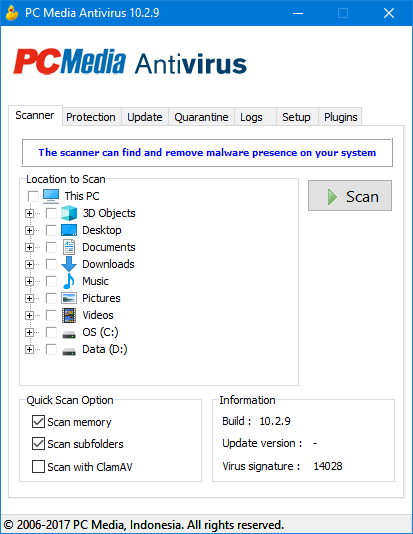
PCMAV consists of a row of tabs.
Scanner is the tab in which you’re able to start a scan.
By default the antivirus scans memory and subfolders too.

After you smack the scan button, the scanner shows the scan progress.
Any file detected as a virus is then displayed in a list.
PCMAV can scan the files by using ClamAV database.
After that, it asks if you are willing to download the database.
Only the first two are enabled by default.
you might disable any of them by removing the relevant check mark.
The Quarantine tab is where you could see the infected files that you have put aside during a scan.
The Setup tab is the part of PCMAV that contains more options to configure how the antivirus should work.
For instance, you might decide which action that PCMAV should take when a USB drive is plugged in.
While it is running in the background, the antiviruss icon is visible in the system tray.
Unlike the majority of antiviruses, it was written by using the Delphi programming language.
The optional ClamAV integration helps the antivirus to detect more viruses.
The most obvious advantage from using PCMAV is that it is light on system resources.
