“Playing video games can make you a better driver.
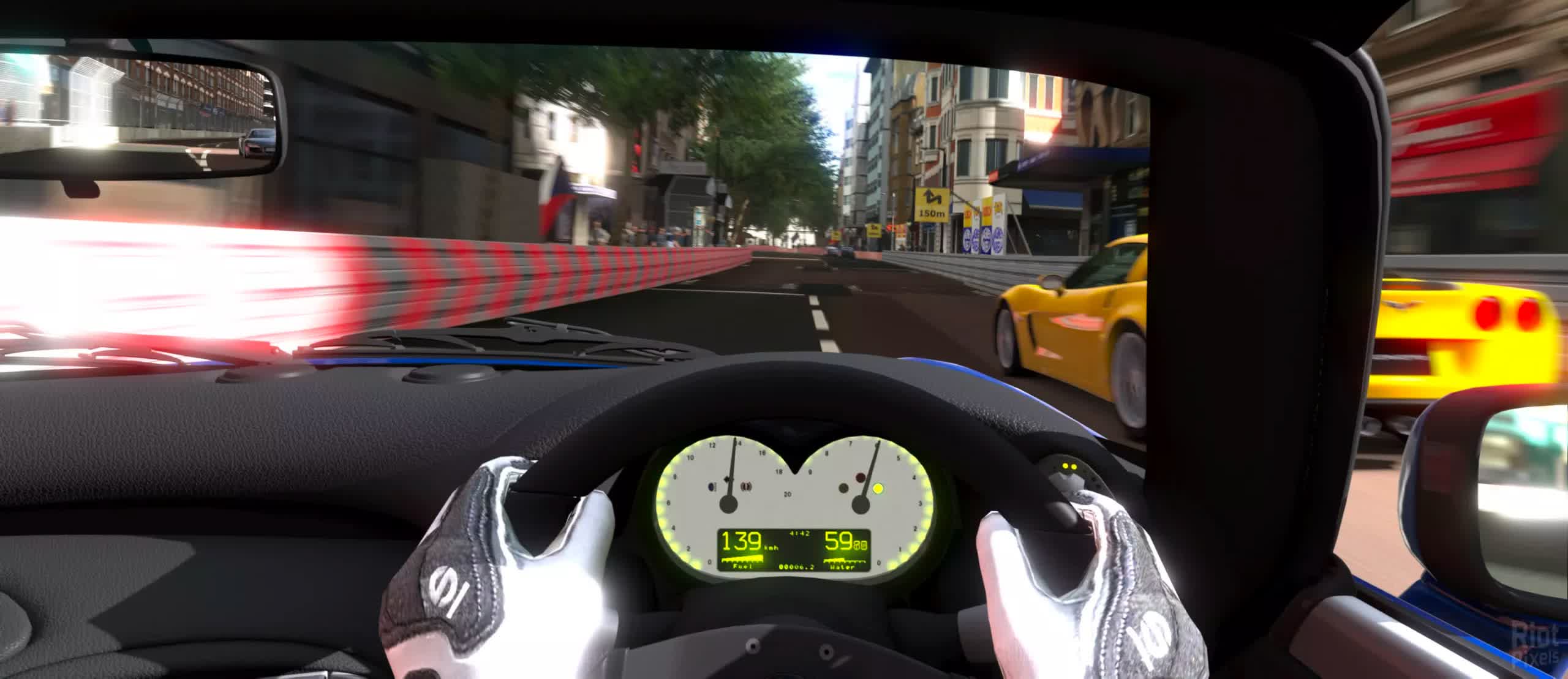
“That statement probably brings to mind games like Gran Turismo or Forza Motorsports.
One of the most apparent and most cited positive effects of playing video games is improved eye-to-hand coordination.
Gaming has come a long way from the single-joystick, single-button days of the Atari 2600.
Now players have to contend with gamepads featuring dual joysticks and 12 or more buttons.
Their eye-to-hand coordination is already conditioned.
But is that directly related to playing games or just an environmental factor?
At first, both groups performed equally.
The cognitive functions and visual acuity are what matters.
Dr. Bavelier analogizes this with an example of driving in a fog.
“Imagine you’re driving in the fog.
Another myth that runs contrary to her findings is that games lead to attention problems and greater distractibility.
Bavelier found that people who play Call of Duty havefar better attentionthan non-players.
Some words introduced a cognitive conflict.
For example, the word blue appearing in red ink.
Results showed that the gamers were far quicker at resolving those conflicts than those that did not play.
Another attention test involves tracking multiple moving targets.
The average person can keep tabs on about three or four objects at once.
Action video game players have a span of around six to seven.
Attention is a critical attribute when driving.
There are many things you have to maintain focus on when driving.
And lab tests show action gamers are very good at this.
Bavelier’s research further confirms the practical testing results with brain imaging.
There are three areas of the brain that regulate attention.
The parietal lobe controls the orientation of attention.
The frontal lobe sustains attention.
Lastly, the anterior cingulate controls how we allocate concentration and resolve conflict.
Fortunately, Bavelier considered causality, too, which is easy to test in the lab.
Bavelier and her team performed a controlled training study to establish causality.
What they did was have participants take cognitive tests at the start.
Then subjects would play 10 hours of action games over two weeks in 40-minute sessions.
The training tests show two things.
First, they prove the causality between visual and cognitive improvements when playing video games like Call of Duty.
The positive effects are not sparked by environmental conditions common to gamers.
Second, it shows that training your brain on these games has lasting effects.
The researchers wanted to know if playing video games improved practical driving skills.
They also wanted to find out whether the bang out of game mattered.
They tested participants using a driving simulator.
One group played action games for 5 to 10 hours, and the other played slower-paced games.
The study found that the action players performed markedly better in subsequent simulator testing than the non-action players.
Researchers used Mario Kart and Rollercoaster Tycoon for action and non-action training, respectively.
However, not all games have these positive benefits.
Slower-paced games seem to have no effect at all.
That is not to say that racing titles have no benefits for drivers.
The Shanghai study showed that Mario Kart improved reaction time better than playing Rollercoaster Tycoon.
