This poses a challenge when surveying disaster-stricken areas, where visibility may be compromised.
Additionally, aerial surveillance can be inefficient when there’s no clear target to track.
To address these limitations, researchers took a creative approach giving drones the ability to detect scents.
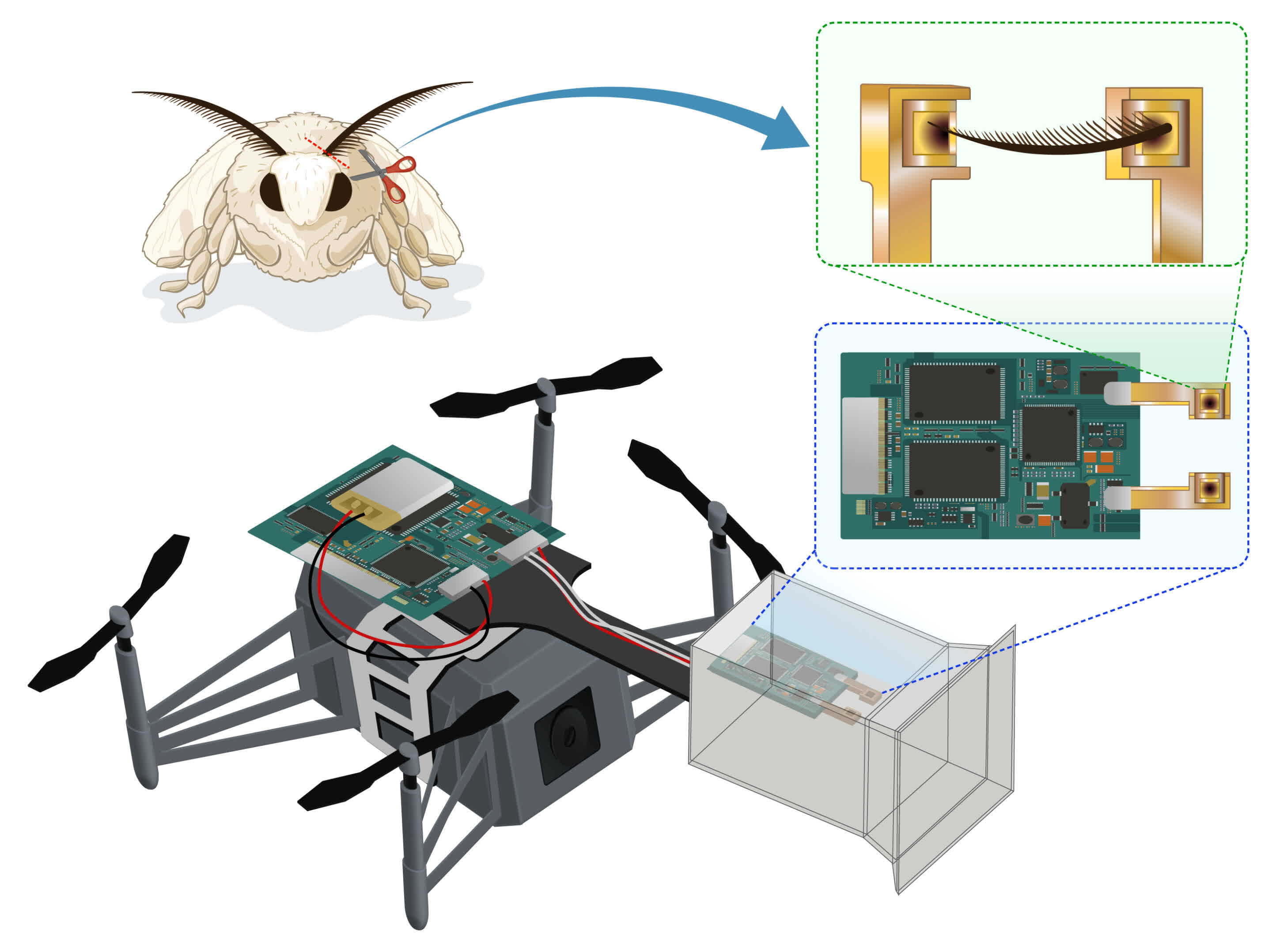
Previously, the research team developed a bio-hybrid prototype using insect antennae electrodes for odor detection.
The antennae interface has also undergone a major upgrade for improved performance.
A newly designed funnel, combined with a conductive coating, helps reduce airflow resistance and electrical noise.
These enhancements increase the bio-drone’s effective range to up to five meters.
Beyond disaster response, the researchers envision a wide range of real-world applications for this scent-tracking technology.
