Written by Clifford
Swap spaceis a part ofsecondary storagethat is used asvirtual memory.
This swapping frees up the main memory for frequently processed data.
Using secondary storage as virtual memory can increase performance for systems that have little main memory available.
It should be used only for infrequent swapping of data that does not require a lot of processing.
While swapping, processes may get slower, data is still nevertheless processed.
The amount of data swapped is not as important as the rate at which swapping occurs.
Swap-out rate is measured over a sample period of time.
The higher this metric is, the more frequently the disk is accessed for swapping.
Since the disk is secondary storage, which is slow, higher rates mean slower data processing.
This means that your system requires more fast physical memory for your workloads, and swap is not helping.
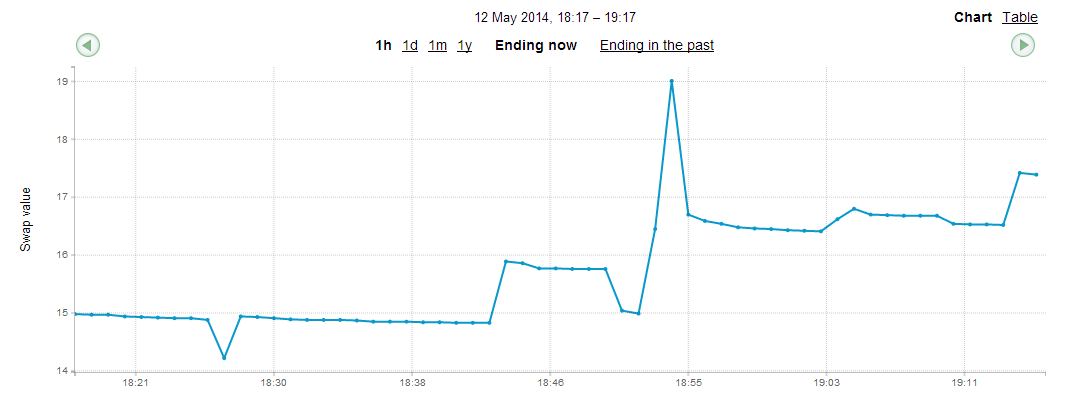
Monitoring swap usage and swap rate can help analyze the workloads on your server.
Balancing the workloads both across servers and on each separate server is the key to providing efficient services.
Understanding the benefits of swapping can help with this balancing.
